
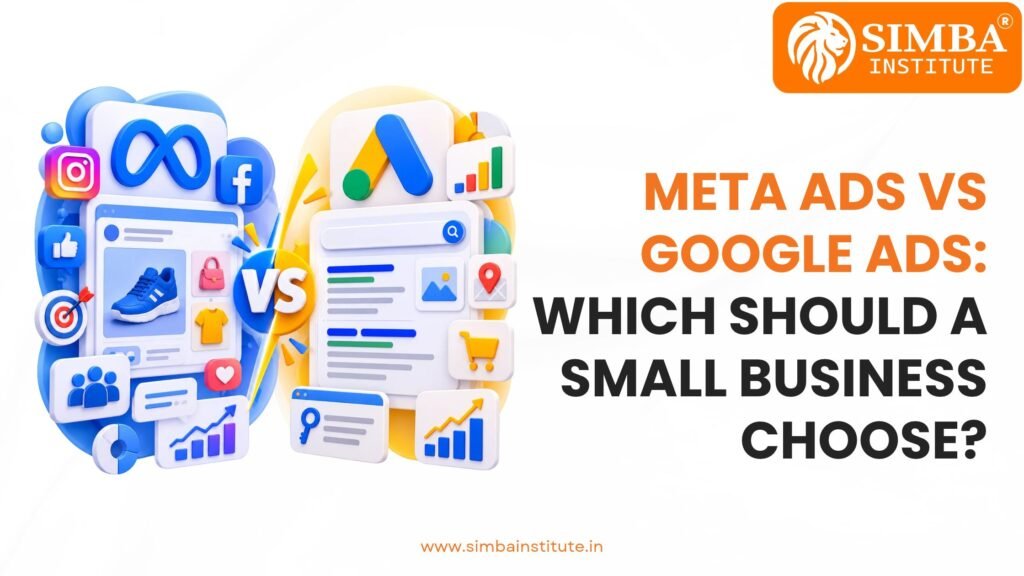
Choosing between Meta Ads and Google Ads confuses most small business owners starting their digital advertising journey. Both sites have powerful features to reach your target audience. The knowledge of Meta Ads vs Google Ads differences will enable you to use your marketing budget wisely. Both platforms have different functions, and their target audiences are different. This all-inclusive guide will compare both sites to guide you towards the correct choice. Small businesses usually end up squandering funds by selecting the wrong channel towards their objectives. Let us discuss the main differences, pros, and cons of each. At the end, you will know precisely what platform best fits your business.
What Are the Key Differences Between Meta Ads and Google Ads?
Meta Ads vs Google Ads operate on fundamentally different principles and platforms. Google Ads will place your adverts in front of people who are searching for your products. Meta Ads (Facebook and Instagram) are seen by individuals on their social feeds. Google dominates demand, and Meta dominates demand using targeted interests. Purchase intent is already in the search of Google users. Meta users learn about your business as they carry out another task altogether. The user mindset and timing are vastly different between these platforms. Google is ideal in terms of immediate conversions and sales. Meta is successful in creating awareness and interest in your brand. This difference is what determines your overall advertising strategy.
The main distinctions between platforms:
Google is search intent-oriented.
Meta is interest- and demographics-oriented.
Google advertisement is in the search results.
Meta advertisements are displayed in social feeds.
Google is a demand capture platform.
Meta demand generation platform.
Buyers of Google have a buying intention.
Passive browsing is taking place among the meta users.
Google is more intent on converting.
Meta is less but wider.
Which Platform Delivers Better ROI for Small Businesses?
ROI is all about your business objectives and the type of industry. Meta Ads vs Google Ads each excel in different situations. Google Ads are normally more effective in making conversions with e-commerce. Meta Ads are less expensive per click, and thus are affordable in creating awareness. Google Local Services Ads are found to have a great outcome in local service businesses. Hotels and salons do well with the visual image-based advertisement of Meta. Google Ads is a popular choice of B2B companies when it comes to generating qualified leads. Meta carousel advertisements and photo displays are advantageous to retail stores. The type of industry you are in will dictate the platform that will give you a better ROI. Firstly, test with small budgets. Whatever scale demonstrates improved performance in your situation.
Comparison of ROI by business type:
E-commerce: Google Ads is normally superior.
Local Ads: Google Local Services Ads.
Brand Awareness: Meta Ads’ strength.
Lead Generation: Google Ads preferred.
Visual Products: Meta Ads excel
B2B Services: Google Ads is better
Restaurant/Retail: Meta Ads working.
SaaS Products: Google Ads suggested.
How Should You Choose Between the Platforms?
To make a decision in terms of Meta Ads vs Google Ads, it is important to be frank about your purposes. Begin by finding out the behavior of your target audience on the internet. Do they actively seek solutions? Choose Google Ads. Is it on social media that they are browsing? Choose Meta Ads. Take into consideration your financial constraints. Meta is cheaper per click among the novices. Google needs bigger competitive keyword budgets. Consider the type of your product or service. Digital goods are more appropriate with Google. Fashion, beauty, and lifestyle products perform well with Meta. Your sales cycle is important as well. Google requires the immediate intent of sales in the short term. Meta has an engagement focus on long-term relationships. Begin with a single platform, gauge outcomes, then continue.
Considerations when selecting:
Online behavior of your target audience.
Type and industry of business.
Budget and time limitation.
Sales cycle length
Conversion objectives and measures.
Type of product or service.
Presence and activity of competitors.
Marketing level of maturity.
How Can You Use Both Platforms Together?
A hybrid approach of combining Meta Ads and Google Ads is frequently the most effective. Google Ads will help attract high-intent customers seeking solutions. Create awareness and retarget visitors to your websites using Meta Ads. This is a two-platform strategy that would maximize your reach and conversions. Google attracts customers who are ready to make purchases. Meta preheats potentials with regard to your business. Meta remarketing campaigns are a beautiful way of transforming Google traffic. Cross-platform strategies work synergistically together. Customers of Google can be retargeted on Meta. Visitors to your Meta awareness campaign are better converted on Google. Combine the two platforms to achieve the highest levels of marketing.
Final Thoughts on Choosing Your Platform
Google Ads or Meta Ads is not a question that serious businesses need to consider. The majority of successful small businesses leverage both channels. Begin with the platform that suits your short-term objectives. Increase on the second platform as your budget increases. Keep a close eye on performance measures in both platforms. Change your strategy depending on the real outcomes rather than guessing. It is essential to keep in mind that both sites need optimization and testing. Learning about your audience is successful. Select platforms on which your audience spends their time. Measure, scale what works, test, learn.
Frequently Asked Questions
Q: What is the less expensive platform for small businesses that are beginning?
A: Meta Ads are usually cheaper at the beginning of their operation. Google Ads might be less expensive in low-competition keywords. Budget varies according to your industry and location.
Q: Is it possible to have both Meta Ads and Google Ads at the same time?
A: Absolutely yes. The majority of rising businesses operate on both platforms. Align your message on both channels.
Q: When will I start to see results on either platform?
A: Results of Google Ads are achieved in 1-2 weeks. Meta Ads are optimized in 2-4 weeks. The first tests are costly and time-consuming.
Q: What platform is best in the case of local businesses?
A: Google Local Services Ads are good for local companies. Meta is effective in local awareness and involvement. Cross-market to get the best local coverage.
Q: Do I require the services of a professional to do these ads?
A: Not necessarily initially. Both sites provide learning materials. Take professional assistance as you climb campaigns. Skills will speed up your outcome.
Start Your Advertising Journey Today
Want to learn digital advertising? Go to the Simba Institute to study effective techniques of Meta Ads vs Google Ads. Their all-inclusive courses empower you to utilize both platforms in an optimal way. Begin with small budgets, experiment with both platforms, and expand what works. Your small business needs professional assistance with digital advertising!