simbainstitute

+91 8200533835
Inquire Now
Confused which course to choose? Talk to our experts for FREE & find the right path for your career — Inquire Now!
Mega Dropdown Courses

full stack developer

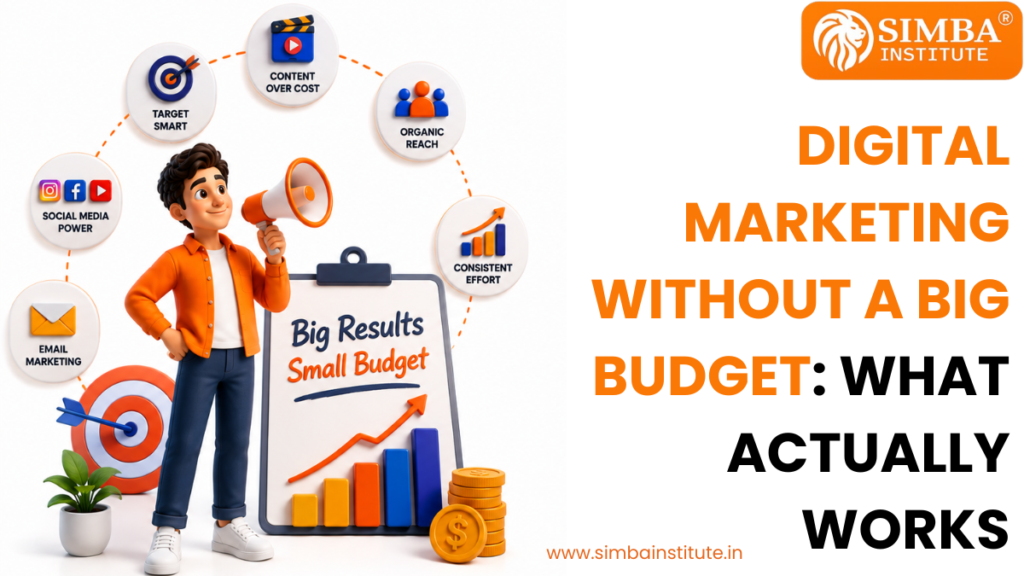
One of the most common assumptions about digital marketing is that you need a large budget to see real results, expensive ad campaigns, professional design teams, and constant paid promotion. For small business owners and students working with limited resources, this assumption can feel discouraging before they even get started. The truth is, some of the most effective digital marketing strategies don’t require a large budget at all. This blog breaks down what genuinely works when you’re marketing with limited resources, based on strategy and consistency rather than spending power. Why Budget Isn’t the Only Factor That Matters It’s easy to assume that businesses with bigger ad budgets automatically win, but budget alone doesn’t guarantee results. Poorly targeted ads or generic content can waste a large budget just as easily as a small one. What actually drives results is understanding your audience, being consistent, and using the right strategy for your specific situation, all of which are possible without spending heavily. What Actually Works Without a Big Budget Organic Social Media Growth Consistently posting valuable, relevant content on platforms like Instagram or Facebook remains one of the most effective low-cost marketing strategies. This requires time and effort rather than money, understanding what your audience finds useful or engaging, and showing up consistently instead of posting randomly. Local SEO and Google Business Profile For businesses serving a specific area, optimizing a Google Business Profile costs nothing but time, yet it can significantly improve visibility for local searches. This is often one of the highest-return activities available to small businesses, since it directly connects them with customers actively searching nearby. Word-of-Mouth Amplified Online Encouraging satisfied customers to leave reviews or share their experience online costs little to nothing but can significantly influence potential customers. A steady stream of genuine reviews often builds more trust than paid advertising alone. Content Marketing and SEO Creating helpful blog posts, guides, or videos that answer real questions your audience is searching for builds long-term visibility through search engines. While this takes time to show results, it doesn’t require ongoing ad spend and continues generating value long after the content is published. WhatsApp and Direct Communication For many local businesses, direct communication through WhatsApp — responding quickly, sharing updates, and maintaining personal relationships with customers — remains a highly effective, low-cost way to convert interest into actual sales. Small, Highly Targeted Ad Spend When a budget is limited, spending a small amount on highly targeted ads — reaching a specific, relevant audience rather than a broad one — is far more effective than spreading a limited budget across a wide, unfocused audience. Where AI Tools Help Even More With a Limited Budget AI tools have made low-budget marketing significantly more effective by reducing the need to spend money on things that used to require hiring outside help: Content creation: AI writing and design tools reduce or eliminate the need for a dedicated copywriter or designer for everyday content. Time savings: automating repetitive tasks like drafting captions or responses frees up time that would otherwise need to be paid for through additional staff. Smarter ad spending: AI-powered ad optimization helps ensure a small budget is used as effectively as possible, rather than wasted on underperforming targeting. What to Avoid When Working with a Limited Budget Trying to be active on every platform at once:  spreading limited time and effort too thin often leads to weak results everywhere instead of strong results somewhere. Boosting posts without a clear strategy:  spending small amounts on ads without proper targeting rarely delivers meaningful results. Expecting instant results from organic efforts:  strategies like SEO and organic social growth take time, and abandoning them too early often means missing out on their eventual payoff. Why This Matters for Small Businesses and Students Understanding that effective marketing doesn’t require a massive budget is empowering, especially for small business owners just starting out or students learning digital marketing for the first time. It shifts the focus from “how much can we spend” to “how smart can we be with what we have,” which is often a far more valuable skill in the long run. How Simba Institute Prepares You for Real-World Marketing At Simba Institute, our Digital Marketing + AI Tools course teaches students practical strategies that work regardless of budget size, including how to use AI tools to maximize results with limited resources, a skill directly applicable to small businesses across Surat and beyond. With branches in Sarthana and Vesu, and a track record since 2015, we focus on teaching students how to think strategically, not just how to spend a budget effectively. Final Thoughts A big budget can make marketing faster, but it was never the actual requirement for making it work. Understanding your audience, being consistent, and using the right strategy for your situation matter far more than how much you’re able to spend, and that’s genuinely good news for small businesses and beginners just getting started. If you’re working with limited resources, focus on the strategies that reward time and consistency, like local SEO, organic content, and genuine customer relationships, rather than assuming you’re at a disadvantage without a large ad budget. Smart, consistent effort will almost always outperform a large budget spent without strategy, and that’s a skill worth building regardless of how big your budget eventually becomes. FAQs: Digital Marketing Without a Big Budget 1. Can small businesses really compete with larger companies using low-budget marketing?Yes, especially with local SEO, organic content, and smart, targeted efforts, small businesses can build strong visibility without needing to match a larger company’s advertising budget. 2. Is organic social media growth still effective without paid promotion in 2026?Yes, consistent, valuable content still performs well organically, though it requires patience and regular effort compared to paid promotion. 3. Should a small business avoid paid ads entirely if the budget is limited?Not necessarily. Even a small, highly targeted ad budget can be effective, as long as it’s focused on a specific, relevant audience rather than spread too broadly.

Digital Marketing Without a Big Budget: What Actually Works Read More »

Blog,
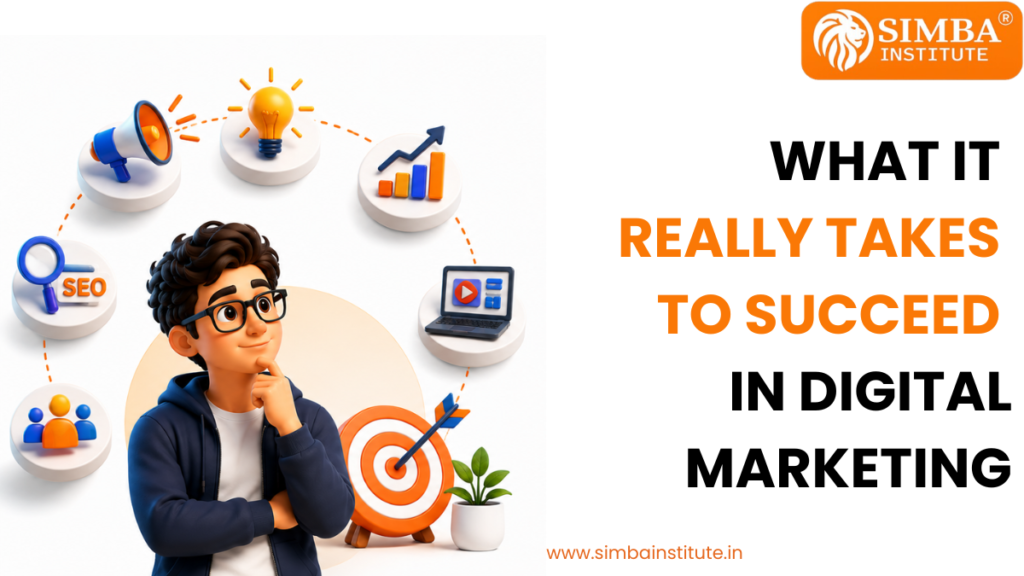
Learning the basics of digital marketing, understanding SEO, running a few ads, posting on social media, is relatively straightforward. Plenty of people reach that stage. But there’s a clear difference between someone who knows the basics and someone who actually succeeds in this field, builds a real career, and stands out to employers or clients. This blog looks beyond the textbook skills and breaks down what genuinely separates marketers who succeed from those who stay stuck at a basic level, no matter how many courses or certifications they collect. Knowing the Basics Isn’t the Same as Understanding Strategy Many beginners learn how to use tools and platforms, how to schedule a post, how to set up an ad, how to write a caption. But knowing how to use these tools doesn’t automatically mean you understand why a particular strategy works for a specific business. Success in digital marketing comes from connecting these individual skills into a coherent strategy, understanding a business’s goals, its audience, and how each action supports a bigger picture, rather than just executing tasks in isolation. Curiosity Matters More Than Most People Realize Digital marketing changes constantly, algorithms update, new AI tools emerge, platforms shift their features. Marketers who succeed long-term aren’t necessarily the ones who learned the most at the start; they’re the ones who stay genuinely curious and keep learning as the field evolves. This means regularly exploring new tools, staying updated with platform changes, and being willing to test new approaches, rather than sticking rigidly to what worked a year or two ago. Being Comfortable with Data, Not Just Creativity Many people are drawn to digital marketing because of the creative side, writing, design, content ideas. But genuine success also requires comfort with data: understanding what’s working, what isn’t, and why, based on actual numbers rather than assumptions or personal preference. Marketers who succeed learn to balance creativity with analytical thinking, using data to guide decisions rather than relying purely on instinct. Knowing How to Use AI Without Losing Your Own Judgment In 2026, using AI tools effectively has become a genuine requirement, not just a bonus skill. But success isn’t about using AI for everything, it’s about knowing when to let AI speed up execution and when to apply your own judgment, creativity, and understanding of the brand. Marketers who over-rely on AI without adding their own thinking often produce generic, forgettable work. The ones who succeed use AI as a tool that supports their skills, not a replacement for them. Communication Skills Matter as Much as Marketing Skills A significant part of succeeding in digital marketing, especially in client-facing or team roles, involves communication, explaining strategy clearly, presenting results, understanding client concerns, and collaborating with others. Technical marketing skills alone aren’t enough if you can’t communicate your thinking or understand what a client or employer actually needs. Consistency Beats Occasional Bursts of Effort Many beginners start strong, posting consistently or working hard for a few weeks, then lose momentum once results don’t appear immediately. Digital marketing, especially areas like SEO and content marketing, often rewards consistent, patient effort over time rather than short bursts of intense activity followed by long gaps. Marketers who succeed treat this as a long-term skill they’re continuously building, not something they master once and then stop actively working on. Building Real Experience, Not Just Certificates Certificates and courses provide a foundation, but genuine success comes from applying what you’ve learned to real or realistic projects, managing an actual social media page, running a real (even small) ad campaign, or working with an actual client, even in a small capacity. This hands-on experience is what actually builds the confidence and skill that certificates alone can’t provide. Why This Matters for Your Career Employers and clients can usually tell the difference between someone who has surface-level knowledge and someone who genuinely understands how to think strategically, adapt, and deliver results. Focusing on these deeper skills, not just the basics, is what actually determines long-term success in this field. How Simba Institute Helps You Go Beyond the Basics At Simba Institute, our Digital Marketing + AI Tools course is built to take students beyond just learning tools and platforms, focusing on strategic thinking, hands-on practice, and genuine AI fluency, so students graduate with the deeper skills that actually lead to real career success. With branches in Sarthana and Vesu, and a track record since 2015, we focus on helping students build the complete skill set, not just the basics, that employers and clients genuinely value. Final Thoughts Anyone can learn the basics of digital marketing, that part isn’t the hard part anymore, especially with so many resources and courses available. What actually separates people who succeed from those who stay stuck is what happens after the basics: staying curious, thinking strategically, balancing data with creativity, and putting in consistent effort even when results take time. If you’re just starting out, don’t worry about mastering everything at once. Focus on building a strong foundation first, then gradually work on these deeper skills as you gain real, hands-on experience. Success in digital marketing isn’t about knowing more than everyone else on day one, it’s about continuing to grow, adapt, and improve long after the basics are behind you.   FAQs: Succeeding in Digital Marketing 1. Is it enough to just learn digital marketing tools to succeed in this field?No, understanding how to use tools is just a starting point. Genuine success also requires strategic thinking, adaptability, and the ability to connect individual skills into a coherent approach. 2. How important is data analysis for someone who prefers the creative side of marketing?Data analysis is important even for creative-focused marketers, since understanding what’s actually working helps guide better creative decisions rather than relying purely on instinct. 3. Can relying too much on AI hurt my growth as a digital marketer?Yes, over-relying on AI without applying your own judgment and creativity can lead to generic work. Success comes from using AI to support

What It Really Takes to Succeed in Digital Marketing Read More »

Blog,
A student coding front-end and back-end web applications in a full stack development class at Simba Institute in Surat.

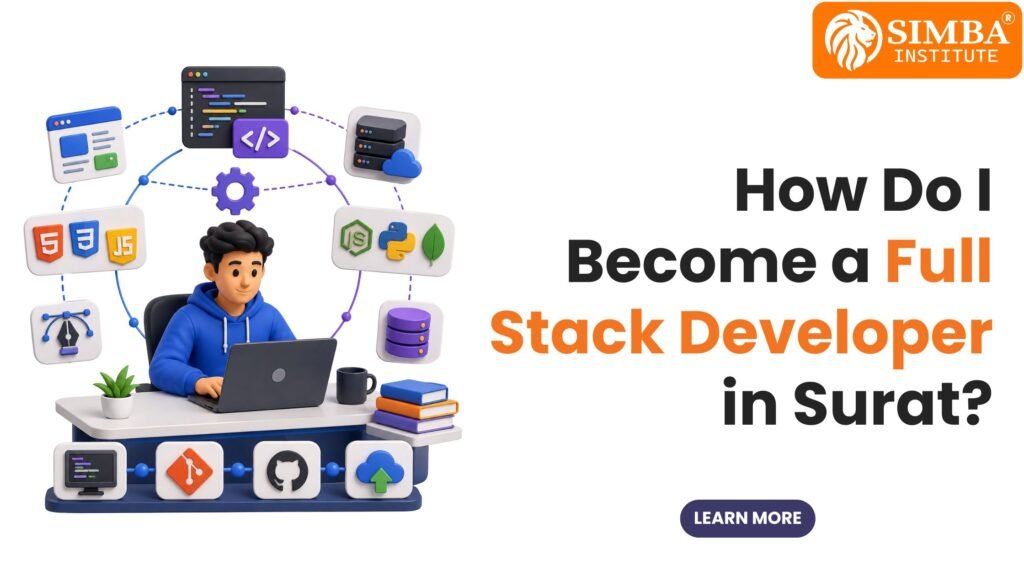
To become a full-stack developer, it will take a clear roadmap, regular practice, and guidance. In case you are in Surat and are keen on a career in web development, one of the quickest routes to a career in web development is to take a structured course in full-stack development in Surat. This roadmap will tell you precisely what to do, what to work on, and how a full-stack developer course in Surat can help you become a job-ready developer in the shortest time possible. What Skills Do You Need as a Full Stack Developer? Full-stack development is not a single skill, but rather a combination of frontend, backend, database, and tool skills that collaborate. Knowing the functionality of each layer lets you know why each part is important. The basic skill areas are as follows: These areas are all systematically covered in a good full-stack developer course in Surat, making the enrollment sometimes smarter than going it alone with free resources. Understanding Frontend and Backend Development The full stack implies that you can develop both sides of a web app. Frontend is what the users can view and manipulate: buttons, forms, animations, and colors. The backend is not actually visible to users but provides all the power – databases, authentication, payment processing, and file storage. The reason is that a frontend-only developer can create a gorgeous site that appears to be broken when a user engages with it. A backend-only developer will be able to build strong features that cannot be accessed by users in a proper manner. This is addressed by full-stack developers as they are aware of the communication between the two layers. Considering the example of ordering something on an e-commerce site, the frontend gathers your data and transmits it to the backend. It is validated by the backend and is stored in a database, where it is processed into a payment, and confirmation is sent back. Both sides were designed and constructed by a full-stack developer. What Should You Do Before Starting a Full Stack Developer Course in Surat? Prior to attaching yourself to any institute, prepare a few steps. These months pre-enrollment are truly significant- they precondition the state of mind and condition you to the level of learning you will experience. Real observations from successful developers: A large proportion of developers who do a full-stack developer course in Surat and get jobs soon are those who have first prepared. They followed YouTube tutorials, tackled simple coding projects, or learnt the basics. They had a context when the course began, and it made everything clear. The following roadmap can be helpful: What is the Typical Timeline to become a full-stack developer? The pace will be determined by your beginning and your intensity: Most students require 1-3 months more practice with portfolio projects before they are job-ready after completing a full-stack developer course in Surat. Businesses would prefer to see what you have created rather than having taken a course. Final Thoughts It is absolutely possible to become a full-stack developer in Surat with the right course, hard work, and realistic expectations. An organized full-stack developer program in Surat provides you with the program, mentoring, and community that would be difficult to develop independently. The course is not magic; it is your everyday practice, curiosity, and readiness to create actual projects that will make you a job-ready developer. Ready to Start Your Full Stack Journey? Today, the best day to take a full-stack developer course in Surat is if you are determined to become a developer. Begin with that month of free preparation, select an institute that offers a good placement program, and practice every day. You will be interview-ready in 6-8 months. Within one year, you will be able to choose numerous employment opportunities. Frequently Asked Questions Q1. Would I be able to make a full-stack developer without a Surat course? Yes, but a structured full-stack developer course in Surat saves 6-12 months and offers mentorship, peer learning, and job support, which is not offered in self-learning. Q2. What is the average salary of a full-stack developer course in Surat? Entry level: 2.5 -4 lakhs; experienced: 6-12+ lakhs in a year, based on business and expertise. Q3. What about a computer science degree prior to enrolling in a full-stack developer course? No, anyone with the bare minimum computer skills can take most courses; most people who have become successful developers are not tech-savvy. Q4. What technology stack should I concentrate on in a full-stack developer course in Surat? MERN (React + Node.js) is the most in-demand in Surat; MEAN and Python stacks are also good options. Q5. What determines whether I am really prepared to take a full-stack developer course? You are ready if you can solve simple code issues, know loops and functions, and can wait to debug them.

How Do I Become a Full Stack Developer in Surat?  Read More »

Blog,
Scroll to Top