
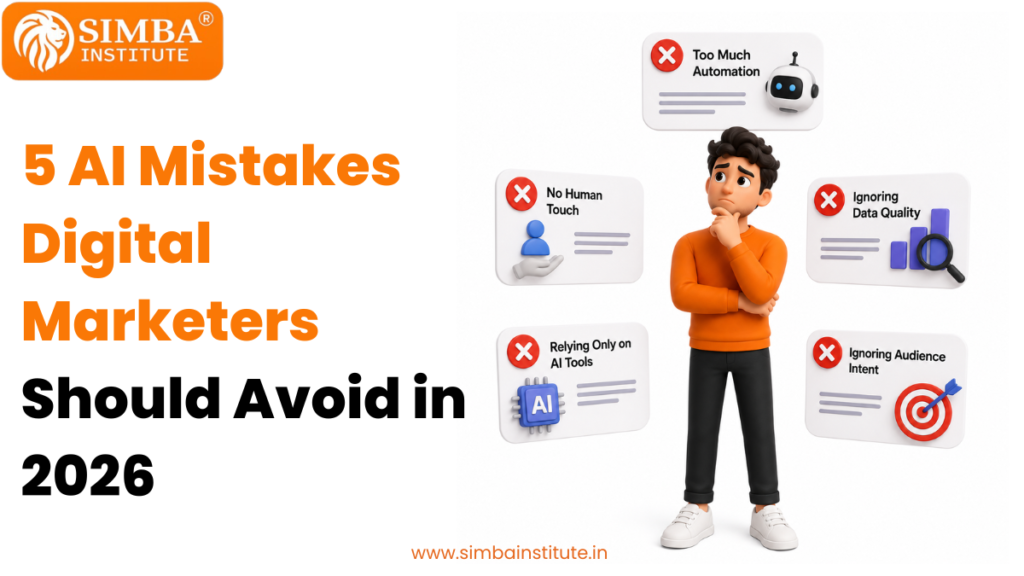
AI has made digital marketing faster and easier in many ways, but it’s also introduced a new set of mistakes marketers didn’t have to worry about before. Using AI tools well isn’t just about knowing how to use them, it’s also about knowing what not to do with them.
This blog covers 5 common AI mistakes digital marketers make in 2026, why they hurt results, and how to avoid them, whether you’re a student just starting out or already working on real campaigns.
Why These Mistakes Matter More Than You’d Think
It’s easy to assume that using AI automatically makes marketing work better. But used carelessly, AI can actually hurt campaign performance, damage brand trust, and make a marketer look less skilled, not more. The difference between marketers who benefit from AI and those who get hurt by it usually comes down to a few avoidable habits.
Publishing AI Content Without Editing It
One of the most common mistakes is taking AI-generated content, captions, emails, blog posts, and publishing it exactly as it was generated, without reviewing or personalizing it.
AI-generated content often sounds generic, repetitive, or slightly “off” in tone, especially when it hasn’t been adjusted to match a specific brand voice. Audiences can usually tell when content feels automated rather than authentic, which can quietly hurt engagement and trust over time.
How to avoid it: Always treat AI output as a first draft, not a final version. Edit for tone, accuracy, and brand voice before publishing anything.
Relying on AI for Strategy Instead of Execution
AI tools are excellent at speeding up execution, writing, designing, analyzing, but they’re not a replacement for strategic thinking. A common mistake is letting AI suggestions guide major decisions, like campaign direction or target audience, without applying human judgment based on actual business goals.
AI can support decisions with data and suggestions, but it doesn’t understand a business’s unique context, goals, or long-term vision the way a marketer does.
How to avoid it: Use AI to support your strategy, not replace it. Make key decisions based on your understanding of the brand and audience, using AI insights as one input among several.
Ignoring Data Privacy and Accuracy
AI tools often require inputting information to generate useful content or insights, and marketers sometimes overlook what data they’re sharing, or fail to verify that AI-generated claims and statistics are actually accurate before publishing them.
Sharing sensitive business or customer information carelessly, or publishing inaccurate AI-generated facts, can create real problems — from privacy issues to damaged credibility if incorrect information is shared publicly.
How to avoid it: Be mindful of what information you input into AI tools, and always fact-check any specific claims, statistics, or data points before including them in published content.
Using the Same AI Output Across Every Platform
Another common mistake is generating one piece of AI content and posting it identically across every platform, Instagram, LinkedIn, email, and website, without adjusting it for each platform’s audience and format.
What works as a LinkedIn post rarely works as an Instagram caption, and content that isn’t adapted to each platform tends to underperform, regardless of how it was created.
How to avoid it: Use AI to generate a strong base version, then adapt the tone, length, and format for each specific platform before publishing.
Not Keeping Up With How AI Tools Are Changing
AI tools are evolving quickly, with new features, capabilities, and best practices emerging regularly. A common mistake is learning one AI tool once and assuming that knowledge stays relevant indefinitely, without keeping up with updates or exploring new tools that could improve results.
Marketers who stop learning quickly fall behind others who continue adapting to new AI capabilities as they become available.
How to avoid it: Make it a habit to regularly explore updates to the AI tools you use, and stay open to trying new tools that could improve your workflow or results.
What These Mistakes Have in Common
Looking at all five mistakes together, there’s a clear pattern: they all come from treating AI as a replacement for effort and judgment, rather than a tool that supports it. The marketers who avoid these mistakes are the ones who stay actively involved in the process, reviewing, personalizing, and thinking critically, rather than letting AI run on autopilot.
Why Avoiding These Mistakes Matters for Your Career
Employers and clients notice the difference between marketers who use AI thoughtfully and those who don’t. Avoiding these common mistakes doesn’t just improve campaign results, it also builds a reputation as someone who genuinely understands how to use AI well, which matters significantly when applying for jobs or managing client work.
How Simba Institute Helps You Build These Habits Early
At Simba Institute, our AI Tools course doesn’t just teach students how to use AI tools, it also focuses on how to use them responsibly and effectively, helping students avoid these common mistakes from the very beginning of their careers. The course covers practical, hands-on training with tools like ChatGPT, Canva, Midjourney, and various automation platforms, so students learn not just what these tools can do, but how to use them thoughtfully, editing AI output, verifying accuracy, and adapting content for different platforms and audiences, rather than publishing AI-generated work as-is.
This kind of responsible, hands-on approach means students walk away with real, job-ready skills instead of just theoretical knowledge of AI tools. Whether it’s avoiding generic content, protecting data privacy, or knowing when to rely on AI versus human judgment, these habits are built into the course from day one, not treated as an afterthought
Final Thoughts
AI mistakes in digital marketing rarely come from the tools themselves, they come from how they’re used. Skipping edits, leaning too heavily on AI for strategy, or posting the same content everywhere without adjusting it are all avoidable habits, not unavoidable side effects of using AI.
The marketers who get real value from AI in 2026 are the ones who stay involved in the process, reviewing, personalizing, and thinking critically about what AI produces, instead of treating it as a shortcut that runs on its own.
If you’re using AI in your marketing work, take a moment to check which of these five mistakes you might be making. Fixing even one or two of them can make a noticeable difference in how your campaigns perform, and how your work is perceived.
FAQs: AI Mistakes in Digital Marketing
1. Is it wrong to use AI-generated content in digital marketing at all?
No, using AI-generated content is fine as long as it’s reviewed, edited, and personalized before publishing, rather than used exactly as generated.
2. Can relying too much on AI hurt a marketer’s career?
Yes, marketers who rely entirely on AI without applying judgment or personalization often produce weaker results, which can affect their reputation and career growth over time.
3. How can I make sure AI-generated content sounds authentic?
Always edit AI output to match your brand’s specific tone and voice, and add details or context that make the content feel genuine rather than generic.
4. Should I use the same AI-generated post on every social media platform?
No, it’s best to adapt AI-generated content for each platform’s format and audience, rather than posting identical content everywhere.
5. How often should I learn about updates to AI marketing tools?
It’s a good habit to check for updates and new features regularly, since AI tools evolve quickly and staying updated helps you use them more effectively.