simbainstitute

+91 8200533835
Inquire Now
Confused which course to choose? Talk to our experts for FREE & find the right path for your career — Inquire Now!
Mega Dropdown Courses

Blog

With so many career options available today, it’s natural to wonder whether digital marketing is still a smart choice, especially with all the changes happening around AI and automation. Some students hesitate, thinking the field might be oversaturated or uncertain because of how quickly things are evolving. The truth is, digital marketing remains one of the most practical, in-demand career paths available in 2026, but understanding exactly why can help you make a confident, informed decision rather than a hesitant one. The Demand Isn’t Slowing Down Every business today, regardless of size or industry, needs some form of digital presence, a website, social media, online advertising, or search visibility. This isn’t a temporary trend; it’s simply how businesses operate now. As more businesses continue moving online, the need for skilled digital marketers continues to grow alongside them, not shrink. Unlike some career paths tied to a specific industry, digital marketing skills are needed almost everywhere, from local businesses in Surat to national brands to companies working entirely online. You Don’t Need a Traditional Degree to Start One of the biggest advantages of digital marketing is accessibility. Unlike careers that require years of formal education before you can start working, digital marketing allows you to begin building real, practical skills relatively quickly, and start applying them in real projects, internships, or freelance work much sooner. Employers in this field generally care more about what you can actually do, your portfolio, your understanding of platforms, your results, than which degree you hold. The Career Paths Are Genuinely Diverse Digital marketing isn’t one narrow job description. Depending on your interests and strengths, you can move toward SEO, social media management, paid advertising, content marketing, email marketing, or even specialize in AI-powered marketing tools and automation. This variety means you can shape your career around what genuinely interests you, rather than being locked into a single, rigid path. AI Is Making Marketers More Valuable, Not Less A common concern is whether AI will reduce the need for digital marketers. In reality, AI is changing how the work gets done, not eliminating the need for skilled marketers. AI tools handle repetitive tasks faster, but strategy, creativity, audience understanding, and decision-making still require human judgment. Marketers who learn to work alongside AI tools are becoming more valuable, not less, since they can accomplish more in less time while still bringing the strategic thinking AI can’t replace. Flexibility That Few Other Careers Offer Digital marketing offers a level of flexibility that’s hard to find elsewhere. You can work for a company, freelance with multiple clients, work remotely, or even build your own personal brand alongside a full-time role. This flexibility appeals especially to students who want a career that can adapt as their circumstances or interests change over time. Quick Entry Into Earning Unlike degree-based careers that often require years of study before earning any income, digital marketing allows many students to start earning, through internships, freelance projects, or entry-level roles, within 6 to 12 months of focused, practical training. This makes it an especially appealing option for students looking to become financially independent sooner rather than later. What You Should Actually Focus On If you’re considering digital marketing as a career, the smartest approach in 2026 is combining strong marketing fundamentals with genuine, hands-on comfort using AI tools. Employers aren’t just looking for people who understand marketing theory, and they’re not looking for people who rely entirely on AI either, they want candidates who can do both well together. How Simba Institute Supports This Career Path At Simba Institute, our Digital Marketing + AI Tools course is designed to give students exactly this combination, solid marketing fundamentals alongside practical AI tool training, backed by an active placement program to help students move confidently from learning to earning. With branches in Sarthana and Vesu, and a track record since 2015, we’ve helped many students in Surat build genuine, sustainable careers in this field, adapting our training as the industry itself continues to evolve.   Final Thoughts Digital marketing continues to prove itself as a practical, adaptable career choice, not because it stays the same, but because it keeps evolving alongside how businesses actually operate. The rise of AI hasn’t reduced its value; it’s simply changed what being “skilled” in this field looks like. If you’re weighing your options after 12th or considering a career switch, digital marketing offers something rare: a low barrier to entry, genuine flexibility, and the potential to start earning relatively quickly, as long as you’re willing to keep learning as the industry evolves. 2026 isn’t a risky time to enter digital marketing, it’s simply a time to enter it prepared, with both strong fundamentals and comfort using the tools shaping its future.   FAQs: Digital Marketing as a Career in 2026 1. Is digital marketing still a good career choice despite AI advancements?Yes, AI is changing how digital marketing work gets done, but it hasn’t reduced the need for skilled marketers who understand strategy, creativity, and how to use AI tools effectively. 2. Do I need a specific degree to build a career in digital marketing?No, most employers focus on practical skills, portfolio, and certifications rather than requiring a specific degree for digital marketing roles. 3. How quickly can I start earning after learning digital marketing?With focused, practical training, many students start earning through internships, freelance work, or entry-level roles within 6 to 12 months. 4. Which digital marketing specialization has the best career prospects?This depends on your interests and strengths, but SEO, paid advertising, and AI-powered marketing skills are currently in particularly high demand. 5. Is digital marketing a good long-term career, or just a short-term trend?Digital marketing continues to grow as more businesses move online, making it a strong long-term career rather than a temporary trend, especially for those who keep their skills updated.  

Why Is Digital Marketing a Smart Career Choice in 2026? Read More »

Blog

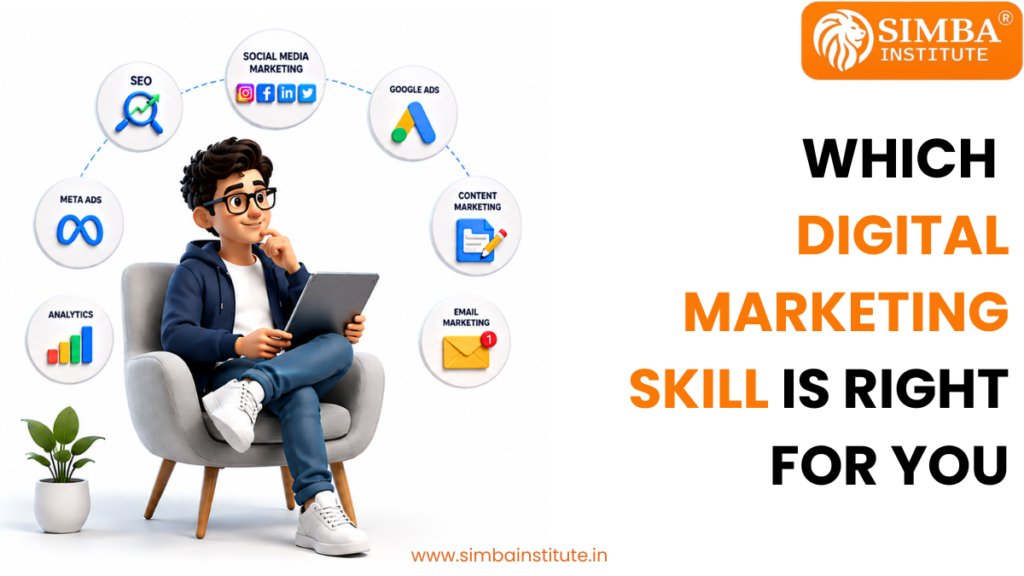
Digital marketing isn’t just one skill, it’s actually a collection of different specializations, from SEO and social media to paid advertising and content marketing. For beginners, this can feel more confusing than helpful. If you’re just starting out, you might be wondering: should I learn a little of everything, or focus deeply on one specific area? This is one of the most common questions students ask once they realize how broad digital marketing actually is. In this blog, we’ll break down the main specializations, what each one actually involves, and how to figure out which direction might be right for you. Why Specialization Matters When you’re just starting out, learning the fundamentals across all areas of digital marketing is important, it gives you a broad understanding of how everything connects. But as you gain experience, specializing in one or two areas helps you become genuinely skilled, rather than having surface-level knowledge of everything without real depth in anything. Employers and clients often look for marketers who are strong in a specific area, especially for more senior or focused roles, which is why understanding your options early can help guide how you build your skills over time. The Main Digital Marketing Specializations SEO (Search Engine Optimization) SEO focuses on helping websites and content rank higher on search engines like Google. This specialization suits people who enjoy research, analysis, and long-term strategy, since SEO results build gradually over time rather than instantly. If you’re someone who likes understanding “why” something works and enjoys problem-solving, SEO could be a strong fit. Social Media Marketing This specialization focuses on building brand presence and engagement across platforms like Instagram, Facebook, and LinkedIn. It suits people who are creative, enjoy content creation, and like staying updated with trends. If you naturally enjoy social media and understanding what makes content engaging, this path often feels like a natural extension of skills you already have. Paid Advertising (Google Ads, Meta Ads) Paid advertising specialists manage ad campaigns, budgets, and targeting to generate leads or sales quickly. This area suits people who are analytical, comfortable with numbers, and enjoy testing and optimizing based on data. If you like the idea of directly seeing measurable results from your work, paid ads can be a rewarding specialization. Content Marketing Content marketers focus on creating valuable content, blogs, videos, guides, that attracts and retains an audience over time. This suits people who enjoy writing, storytelling, or content creation, and who think strategically about what an audience actually needs to know. Email Marketing Email marketing specialists focus on building relationships with an audience through direct, personalized communication. This suits people who enjoy writing persuasively and understanding customer journeys, since good email marketing is closely tied to timing and personalization. How to Figure Out What Fits You If you’re still unsure, here are a few practical ways to figure out which direction feels right: Reflect on what you naturally enjoy:  do you like writing, analyzing numbers, creating visuals, or building strategy? Your specialization often aligns with tasks you already find engaging. Try a bit of everything first:  most good digital marketing courses cover the fundamentals of each area, giving you a chance to see what genuinely interests you before committing. Pay attention to what you’re naturally good at:  sometimes the specialization that suits you best is the one where tasks feel easier or more intuitive compared to others. Consider what type of work environment appeals to you:  some specializations, like paid ads, involve constant testing and quick results, while others, like SEO or content marketing, involve more patience and long-term thinking. You Don’t Have to Decide Immediately It’s worth remembering that specialization usually happens naturally over time, not as a single early decision. Many marketers start with a broad foundation, work across different areas during their first few projects or jobs, and gradually gravitate toward what they enjoy and excel at most. Rather than pressuring yourself to choose immediately, focus on building strong fundamentals first — the right specialization often becomes clearer once you have some real, hands-on experience across different areas. Why This Matters for Your Career Employers value marketers who understand the full digital marketing landscape, even if they eventually specialize. Having a broad foundation makes you more adaptable, while a genuine specialization makes you more valuable for specific roles — the combination of both is what makes a well-rounded, hireable digital marketer. How Simba Institute Helps You Explore and Specialize At Simba Institute, our Digital Marketing + AI Tools course covers all the core specializations — SEO, social media, paid advertising, content, and email marketing — giving students hands-on exposure to each area before deciding where to focus deeper attention. With branches in Sarthana and Vesu, and a track record since 2015, we help students build a strong, well-rounded foundation first, so their eventual specialization is based on real experience, not guesswork.   Final Thoughts Trying to master every part of digital marketing at once often leads to knowing a little about everything but not being truly skilled at anything. Specialization isn’t about limiting yourself,  it’s about becoming genuinely good at something, which is what actually makes you valuable to employers and clients. If you’re still unsure which direction fits you best, that’s completely normal. Give yourself time to explore SEO, social media, ads, content, and email marketing through real, hands-on practice, rather than trying to decide in advance based on theory alone. The right specialization usually reveals itself once you start doing the actual work, so focus on building a strong foundation first, and let your specialization develop naturally from there.   FAQs: Choosing a Digital Marketing Specialization 1. Do I need to specialize in digital marketing right away as a beginner?No, it’s generally better to build a broad foundation first and specialize gradually as you gain hands-on experience and discover what you enjoy most. 2. Which digital marketing specialization pays the most?This varies by industry, experience, and location, but paid advertising and SEO specialists are often in high

Which Digital Marketing Skill Is Right for You Read More »

Blog
A career counselor at Simba Institute guiding a student through different computer course options and IT career paths in Surat.

Selecting the appropriate computer course in Surat may be a daunting experience amidst a myriad of institutes, syllabuses, and fee packages that want your attention. You can be a student deciding on your first career move or an employee in need of upskilling: the choice of computer course in Surat will define how quickly you will acquire practical, applicable skills, and when you will be hired. This guide will take you through what to specifically look for before you enroll anywhere, so you can save your time, money, and effort on the wrong program. What Should You Check Before Choosing a Computer Course? It is always prudent to consider some basics before shortlisting any institute. Not all of the courses that sound good on an ad or brochure actually impart actual skills, appropriate mentoring, and employment assistance when you are enrolled in the course. Here is a brief overview of what is most important when making a choice: Content of the course- is the syllabus in line with industry requirements (MS Office, Tally, coding, digital marketing, etc.)?Experience of faculty- are trainers professors or classroom theory teachers only?Value of certification – does the certificate have value in the eyes of employers, government exams, or higher education?Prices vs time-span- are the charges really commensurate with the extent, time, and duration of the course?Placement support – is the institute active in assisting with resumes, mock interviews, or job tie-ups?Learning mode – does it include offline, online, or a combination, and does it suit your schedule? These six checkpoints will make your choices very limited in a short time, and will make it a lot easier to compare any computer course in Surat. Why Does Course Content Matters the Most? Of all these, the syllabus is probably the most important determinant of whether a course will really benefit your career. A course that is years old often teaches an outdated version of the software or leaves out all the software that is hot at the moment. Find institutes where the curriculum is updated often and integrates hands-on projects rather than lectures in PowerPoint style. As an illustration, a good web development course ought to entail the creation of live websites, rather than theory concerning HTML tags. Likewise, a good Tally course must not only include GST filing or basic drills associated with data entry, but also include real-life accounting situations. How Do Beginners and Working Professionals Choose Differently? What is right to you now has an altered meaning due to your present background. The needs of a student taking their first computer course in Surat will be vastly different from those of a working professional who is either aiming to be promoted or needs to change jobs.The decision typically works out in each group as follows: In the case of beginners (students, freshers): Begin with essential training such as CCC, O-Level, or MS Office.Select slower-paced, concept-based teaching institutes.Consider certification that can help in government or entry-level jobs in the private sector. For working professionals: Find short-term skill-specific courses (Excel Advanced, Tally Prime, Digital Marketing)Choose weekend or evening batches that may fit around current work schedules.Concentrate on ROI, courses applicable to your present job position. An example is that one who is already working in accounts may choose a higher-level Tally and GST course, whereas a college student who aims to become a professional in IT may choose a full-stack development program instead. They are both technically computer courses in Surat; however, which one you take depends solely on where you are starting and where you are going. The easiest method of testing any institute is to take a free demo lesson before joining it. When they are indecisive and sound off with excuses that are mere red flags, respected institutions are most likely pleased to have you sit in on one of their sessions, since they know their pedagogy will speak volumes. Final Thoughts When selecting the appropriate computer course in Surat, it is not just about ensuring that you pick up the most popular, the best-advertised computer institute, but about aligning the content of the course, the method of teaching, and the value of the certificate to your specifications. Compare syllabuses with each other, request demonstration classes, and check actual placement results before you make your commitment. Some research now will save months of futile struggle and cost down the road. Ready to Get Started?Still not sure what course fits your career? List your real objective: a job, skill development, or business application, and compare at least three institutes side by side before deciding. The correct course is there; you only have to pose the correct questions initially. Frequently Asked Questions Q1. What is the average length of a course in Surat that deals with computers?The most fundamental (such as CCC or MS Office) courses last 1-3 months, whereas more specialized courses, such as web development, digital marketing, or Tally with GST, can last 3-6 months depending on the level of detail and speed. Q2. Which is the best place to undertake an online or offline computer course in Surat?Offline tends to be more appropriate when you require practical instructions and a rigid and set-in-stone timetable. The internet is effective when you have self-control and can work at any time, which is particularly handy when you are a working person. Q3. Are computer classes in Surat guaranteed employment?Only a very small number of the institutes are legally allowed to give a guarantee of placement; however, a lot of the reputable institutes provide real placement services, resume creation, mock interviews, and direct contacts with local hiring firms. Q4. How much is the average cost of a computer course in Surat?Prices diffuse considerably; simple courses will cost between ₹2,000 and ₹8,000, whereas more advanced or specialized courses, such as full-stack development or digital marketing, may cost between ₹10,000 and 30,000 or higher. Q5. Is it better to take a government-approved or a private computer course?Government-certified courses (such as CCC or O-Level) are particularly useful

How Do I Choose the Right Computer Course in Surat? Read More »

Blog

When someone in Surat searches for “boutique near me,” “best salon in Vesu,” or “digital marketing course in Sarthana,” the businesses that show up first usually get the customer. This is what local SEO is all about, making sure your business appears when nearby customers are actively searching for what you offer. For years, local SEO required consistent manual effort: updating your Google Business Profile, managing reviews, tracking local keywords, and staying on top of ranking factors. In 2026, AI is making this process significantly easier, even for business owners with no prior SEO experience. This blog breaks down how. Why Local SEO Matters So Much for Surat Businesses Unlike national or global brands, most businesses in Surat rely heavily on local customers, people searching for services or products nearby, ready to visit or purchase soon. If your business doesn’t show up clearly in local search results and Google Maps, you’re likely losing customers to competitors who do, regardless of how good your actual product or service is. This makes local SEO one of the highest-impact, most cost-effective marketing efforts a Surat-based business can invest in. How AI Is Simplifying Local SEO Optimizing Google Business Profile Faster A well-optimized Google Business Profile is one of the biggest factors in local search visibility. AI tools now help business owners write compelling business descriptions, generate relevant service listings, and craft posts and updates quickly, without needing to know SEO best practices in detail. Managing and Responding to Reviews Customer reviews directly influence both local rankings and customer trust. AI tools can help business owners draft thoughtful, professional responses to reviews quickly, including handling negative reviews diplomatically, instead of spending time crafting each reply manually or leaving reviews unanswered. Finding the Right Local Keywords Understanding what local customers are actually searching for used to require manual research or expensive tools. AI-assisted keyword research now helps identify relevant local search terms, like specific neighborhoods, service types, or common local phrases, much faster, making it easier to optimize website and listing content accordingly. Creating Location-Specific Content Content that mentions specific areas, landmarks, or local context tends to perform better for local search. AI writing tools can help generate location-specific blog posts, service pages, or social content, for example, content tailored separately for Sarthana and Vesu audiences, without starting from scratch each time. Tracking and Understanding Local Performance AI-powered analytics tools can simplify tracking how a business is performing in local search, summarizing which keywords, listings, or content are driving the most visibility and foot traffic, so business owners can make informed decisions without manually analyzing complex reports. A Simple Local SEO Checklist Using AI Here’s a practical starting point for using AI to improve local SEO: Optimize your Google Business Profile: use AI to refine your business description, services, and regular updates. Stay on top of reviews: use AI to help draft timely, professional responses to both positive and negative reviews. Research local keywords: use AI tools to identify what local customers are actually searching for. Create location-specific content: write blog posts or website content that speaks directly to your specific area or neighborhood. Track what’s working: regularly review performance insights to understand which efforts are driving real results.   What AI Can’t Do for Local SEO While AI simplifies much of the process, some parts of local SEO still depend entirely on the business itself: Delivering a genuinely good customer experience: reviews and reputation ultimately reflect real service quality, which AI can’t fabricate. Building real local relationships: community trust, word-of-mouth, and local partnerships still matter and can’t be automated. Consistency over time: local SEO is a long-term effort, and AI tools support the process, but they don’t replace the need for ongoing attention.   Why This Matters for Surat’s Business Community As more businesses in Surat start using AI to strengthen their local SEO, the businesses that adopt these tools early gain a real advantage, better visibility, more inquiries, and stronger local rankings, without necessarily needing a bigger marketing budget than their competitors. How Simba Institute Helps Businesses and Students with This At Simba Institute, our Digital Marketing + AI Tools course covers practical local SEO strategies alongside AI tool training, helping students learn how to manage local search visibility effectively, a skill directly applicable to local businesses across Surat and beyond. With branches in Sarthana and Vesu, and a track record since 2015, we’ve helped students build skills that translate directly into managing real local business marketing, including practical work with tools like Google Business Profile.   Final Thoughts Local SEO has always mattered for small businesses, but doing it well used to require time and technical know-how that many business owners simply didn’t have. AI is changing that, making it easier to optimize a Google Business Profile, understand local search trends, and stay visible to nearby customers without needing to be an SEO expert. For businesses in Surat, this means competing for local visibility is no longer just about who has the biggest budget, it’s about who uses the right tools smartly. AI can’t replace genuine customer relationships or a good product, but it can make sure the right customers actually find you online. If you’re running a business in Surat, now is a good time to start using AI to strengthen your local SEO, before your competitors do it first. FAQs: AI and Local SEO for Surat Businesses 1. Can AI tools completely handle local SEO without any manual effort?No, AI tools simplify tasks like content creation and review responses, but consistent oversight and genuine business quality still play a major role in local SEO success. 2. Is local SEO only useful for businesses with a physical location?Local SEO is most valuable for businesses serving a specific geographic area, but service-based businesses that operate locally, even without a storefront, also benefit significantly. 3. How long does it take to see results from local SEO efforts?Local SEO typically shows noticeable improvements over a few months of consistent effort, rather than overnight, since it depends on ongoing optimization and review

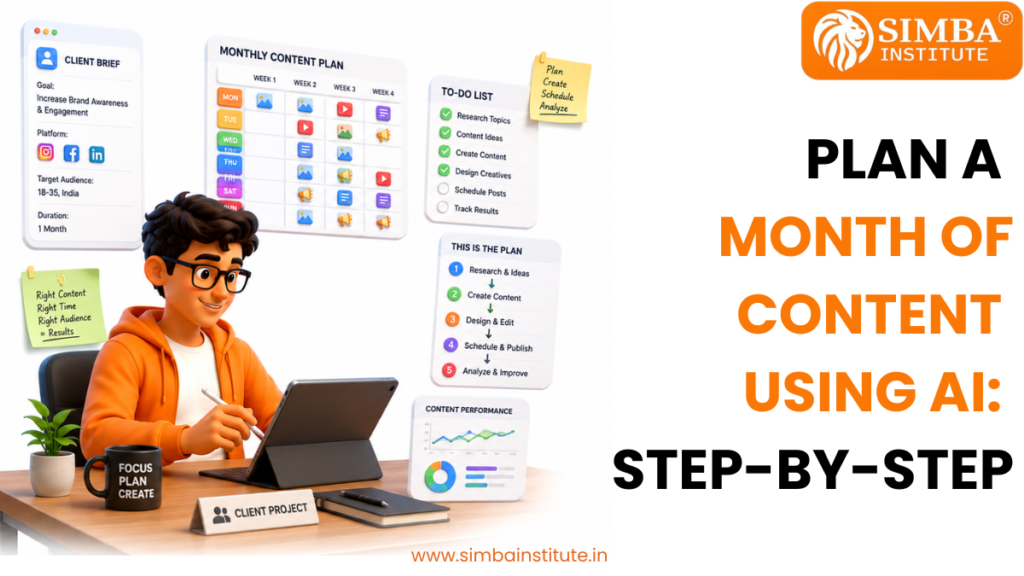
Plan a Month of Content Using AI: Step-by-Step Read More »

Blog, Digital Marketing
A digital marketing professional analyzing real-time growth data and campaign opportunities on a laptop screen at Simba Institute.

Looking for some genuine digital marketing opportunities that will pay off in 2026? The online economy continues to grow, and companies of all sizes require individuals with an online growth perspective. This guide disaggregates the best openings today, including full-time positions as well as freelancing and business concepts. This roadmap can guide you in the right direction, whether you are a student, career switcher, or working professional. What are the Digital Marketing Opportunities? The market is more diverse than ever. No longer must you decide between a job and a business. Rather, online marketing possibilities have become diverse in a variety of formats based on your objectives and lifestyle. Freelancers work independently and across projects (on a project basis); companies hire in-house teams, and agencies serve several clients. Also, there are a significant number of professionals who create their personal brands and do client work. Primary sources of opportunity are: Full-time in-house marketing positions. Agency-based marketing positions Contract and freelance projects. Consulting for small businesses Creation of content and collaborations with influencers. Marketing automation and technology-oriented jobs. Being able to take more than one route is an advantage because you can select the one that suits you. As an illustration of this, an individual who likes a stable environment can opt to use in-house positions. In the meantime, flexible people usually choose freelancing or consulting jobs. Which Digital Marketing Opportunities Suit Beginners? Novices tend to think that they have to gain experience first. There are, however, numerous points of entry to those just starting out. Small projects can be constructed in a building-open-door period rather than the one awaiting the ideal qualification. One of the best initial points is the use of internships. Moreover, freelance sites enable novices to establish a portfolio as they continue learning on actual assignments. Beginner-friendly opportunities include: Management internships in social media. Blogs and content writing. Simple SEO and research of keyword positions. Assistant email marketing jobs Social media management of small businesses. Google Ads/ Meta Ads level apprenticeship. In addition, big marketing teams are not affordable to many small businesses. Accordingly, they can employ novices at a cheaper cost in place of training and versatility. This forms an entry barrier that is easy to enter. How Has AI Created New Digital Marketing Opportunities? The marketing world has taken a new form due to AI. Instead of destroying jobs, it has been generating completely new positions that were not there a few years ago. Organizations now require individuals with knowledge on how to make AI tools strategically. Marketing content has become a real skill that needs to be done in a timely manner. Equally, AI-based optimization of ads has also developed specialized positions that specialize in automated campaigns. The new AI-based jobs are: AI content strategist Marketing automation specialist AI-assisted SEO analyst Conversational marketing designer Data-driven personalization expert AI ad campaign optimizer To ensure the quality of AI-generated content, many brands now employ experts to do so. As an example, a content team can first resort to the AI to create first drafts, and then find an editor to provide authenticity and brand voice to their work. In the same way, agencies are also in search of professionals who could integrate automation with human creativity, as audiences do not want pure automation instead of a real story. What Digital Marketing Opportunities Exist for Freelancers and Business Owners? Freelancing has become one of the most adaptable digital marketing prospects in the world today. A large number of professionals are creating new career streams without having to work in a conventional organization. Also, small business owners, who need marketing assistance, are unable to employ full teams. This loophole leaves a high demand for freelance consultants capable of handling all aspects of social media and paid advertisements. The freelance and business opportunities include: Local business management on social media. SEO services for small websites. Conducting Meta and Google Ads campaigns. Email marketing automation and setup. Personal branding and content creation. Vending online marketing courses or templates. In the meantime, there is an increased demand in tier 2 and tier 3 cities. Small cities also provide a lack of familiar marketers, and the opportunity is left untapped for those who are willing to work remotely with such clients. Final Thoughts The digital marketing world is providing more opportunities than ever. Regardless of your need to be stable with a full-time position or to be flexible with freelancing, there are real digital marketing opportunities at all skill levels and career levels. AI has further enlarged this space, introducing new professional niches, not eliminating them. The trick is to begin with the little stuff, gain actual experience in a project, and progressively narrow down to what you are good at. Regular practice and practical use will be more effective than theoretical knowledge. Are You Ready to Tap into Your Digital Marketing Potential? Waiting until the right time to begin. Find the digital marketing opportunities that align with your existing skills, be it a small freelance job or an entry-level internship. You can also check our guide to Top Digital Marketing Opportunities You Should Explore in 2026. Start now and create your portfolio and develop steadily into the area of specialization that you are most excited about. FAQs Q1: Which are the most effective online marketing opportunities in the absence of experience? The simplest access points are internships, small business social media management, and freelance micro-projects. At this level, it is more important to build a portfolio, rather than to gain formal experience. Q2: Does it make sense to have digital marketing opportunities as a side hustle? Yes, lots of professionals begin to work on freelance activities in addition to their primary occupation. Social media management and content writing are good side hustles because of flexible time. Q3: Do AI increase or decrease the opportunities of digital marketing? They are expanding, not reducing. AI has generated new specialized jobs and heightened the need to hire professionals with the capacity to integrate automation

What Are the Best Digital Marketing Opportunities Right Now? Read More »

Blog, Digital Marketing

One of the biggest questions students ask before enrolling in a digital marketing course isn’t just “what will I learn?” it’s “what happens after I finish?” Placement support is often the deciding factor between choosing one institute over another, but many students don’t actually know what placement assistance looks like in practice. This blog breaks down what you can realistically expect from digital marketing course placement, how it actually works, and what you can do to make the most of it once your course is complete. Why Placement Support Matters So Much For most students, the goal of taking a digital marketing course isn’t just to learn, it’s to get a job or start earning from these skills. Without a clear plan for what happens after completion, even a well-taught course can leave students feeling stuck, unsure of how to actually apply what they’ve learned in a real job setting. This is why placement support has become such an important factor when choosing where to study. It bridges the gap between finishing a course and actually starting a career. What Digital Marketing Course Placement Usually Includes Placement support can vary between institutes, but a genuine placement program typically includes the following: Resume and Portfolio Guidance Before applying for jobs, students need a resume and portfolio that actually reflects their skills. Good placement support includes help building a resume tailored to digital marketing roles, along with guidance on presenting project work and practical experience effectively. Interview Preparation Knowing digital marketing concepts and confidently explaining them in an interview are two different skills. Placement support often includes mock interviews and guidance on how to answer common digital marketing interview questions clearly and confidently. Connections with Hiring Partners One of the most valuable parts of a placement program is access to companies actively looking to hire. Institutes with established hiring partnerships can connect students directly with businesses looking for digital marketing talent, rather than leaving students to search entirely on their own. Guidance on Job Applications Beyond just connecting students with opportunities, good placement support includes guidance on how to apply effectively, where to look for roles, how to tailor applications, and how to follow up professionally. What Placement Support Does Not Guarantee It’s important to set realistic expectations. Placement support means guidance, preparation, and access to opportunities, it does not mean a guaranteed job regardless of effort or skill level. Students who actively participate in projects, build a strong portfolio, and apply themselves during the course are naturally in a stronger position when it comes to placement outcomes. Institutes that promise guaranteed jobs without any effort required from the student’s side should be approached with caution, since genuine placement support works alongside a student’s own preparation, not instead of it. How to Make the Most of Placement Support If you’re currently taking or considering a digital marketing course, here’s how to get the most value from placement assistance: Build a real portfolio during the course: don’t wait until the end. Work on genuine or simulated projects throughout your training so you have concrete examples to show employers. Take mock interviews seriously: use them as genuine practice, not just a formality, so you’re actually prepared when real interview opportunities come up. Stay engaged with placement updates: actively follow up on opportunities shared with you rather than waiting passively for a job to be handed to you. Keep learning after the course ends: digital marketing continues to evolve, especially with AI tools, so staying updated even after placement improves long-term career growth. What This Looks Like at Simba Institute At Simba Institute, our Digital Marketing + AI Tools course includes structured placement support designed around these exact principles — resume guidance, interview preparation, and connections with hiring partners like Narola and Logicwind, so students aren’t left figuring out the job search on their own after completing the course. With branches in Sarthana and Vesu, and a track record since 2015, our focus has always been on preparing students with both the practical skills and the placement guidance needed to move from “course completed” to “job ready.” Final Thoughts Placement support can genuinely make the difference between finishing a course and actually starting a career, but it works best as a partnership, not a guarantee. The support is there to prepare you, connect you with real opportunities, and guide you through the process, but the effort you put into your portfolio, interviews, and follow-through still shapes the outcome. If you’re evaluating a digital marketing course based on its placement support, look past general promises and ask specific questions, about hiring partners, interview preparation, and what students actually do during the program to get job-ready. The right course, combined with real effort on your part, is what actually turns a certificate into a career. FAQs: Digital Marketing Course Placement 1. Does completing a digital marketing course guarantee a job?No, placement support provides guidance, preparation, and access to opportunities, but the outcome also depends on the student’s effort, portfolio, and performance during interviews. 2. What should I look for when checking an institute’s placement support?Look for real details like resume guidance, mock interviews, and named hiring partners, rather than vague promises of guaranteed placement without any specifics. 3. How soon after completing the course can I expect placement support to begin?This varies by institute, but placement support often begins toward the later part of the course, once students have built enough practical skills and portfolio work to start applying confidently. 4. Can I get placement support if I’m also interested in freelancing instead of a job?Yes, many institutes also offer guidance for students interested in freelancing, though the specific support may differ from traditional job placement assistance. 5. What can I do if I don’t get placed immediately after my course?Continue building your portfolio, apply consistently, seek feedback on interviews, and stay updated with new digital marketing and AI skills, since persistence and continued learning significantly improve outcomes over time.

Digital Marketing Course Placement Guide for 2026 Read More »

Blog
A comprehensive career roadmap graphic detailing the skills and certifications needed to succeed in digital marketing in 2026 by Simba Institute.

Have you ever wondered how to establish a flourishing career as a digital marketer in 2026? The industry has evolved quickly, and AI has become the influencer of nearly all aspects of marketing work. This guide divides the techniques, credentials, and development phases you need to be successful. Being a fresher or changing profession, this roadmap will provide you with the idea of where to begin and how to develop. What Does a Digital Marketing Career Path Look Like in 2026? A digital marketing career path today isn’t linear. Rather, it splits into expert paths depending on your areas of interest. You can select either SEO, paid advertisement, content, or social media. The majority of professionals begin as generalists. Then, they proceed towards a single specialization in 1-2 years. The employers are now demanding specialists rather than generalists because companies demand measurability of results. Typical career paths are: Digital Marketing Intern/Trainee (0-1 year)Executive/Associate (1-2 years)SEO, PPC, Content, Social Media Specialist.Team Lead/Senior Manager (3-5 years)Head of Marketing/CMO (8+ years) Why Specialization Matters Now? The generic marketing skills are no longer outstanding. When recruiters are seeking individuals who have expertise in an area, they are on the hunt. To cite an example, an SEO expert who has tangible ranking results is hired more quickly than a generalist with basic knowledge anywhere. What Skills Do You Need for This Career Path? A combination of creative and technical skills is essential in building a successful digital marketing career path in digital marketing. AI now takes centre stage in nearly all marketing functions. In 2026, marketers who combine data expertise with innovative thinking are triumphant. The firms seek individuals who are able to leverage AI tools, but also exercise strategic judgment.The required skills to be developed: Search optimization of SEO and AI.Paid advertising (Google Ads, Meta Ads).Storytelling and content marketing.Data analytics and reporting.Marketing automation toolsTimely AI content engineering.Social media management and strategy.Fundamental knowledge of UX concepts. Moreover, communication skills are as important as technical skills. You need to communicate data knowledge to the non-technical stakeholders. Thus, soft skills can still be useful with your knowledge of tools. Which Certifications Boost Your Digital Marketing Career Path? Certifications certify your skills to the employer. Yet, all certificates are not equal in 2026. Recruiters are now seeking more practical and hands-on certifications that are related to actual tools. The appropriate certification is dependent on your specialization. As an example, a person interested in ads would want to concentrate on Google Ads certifications. In the meantime, a content specialist ought to consider content marketing qualifications. Top Certifications Worth Pursuing The Digital Marketing & E-commerce Certificate offered by Google enjoys a lot of respect in the world. It now involves AI-assisted marketing processes in addition to the conventional skills. Likewise, the Social Media Marketing Certificate offered by Meta includes paid advertising using AI-based targeting. Recommended certification options: Google Digital Marketing & E-commerce CertificateMeta Social Media Marketing Professional CertificateHubSpot Content Marketing CertificationGoogle Analytics/Measurement CertificationAI-based marketing qualifications (prompt engineering, automation)LinkedIn Marketing Labs (B2B) Indeed, more than three-quarters of marketing jobs today demand experience with AI tools and analytics platforms. Therefore, certifications that show practical application are more valuable than theoretical ones. How Does AI Change Growth Opportunities in Digital Marketing? Marketers have not been displaced by AI. Rather, it has transformed what is being spent by marketers. Monotonous work, such as writing ad copy or simple reports, is now easily automated.As a result, there is additional time for strategy and creativity by professionals. Directors of AI tools are the ones who move ahead in their careers because they are strategic in their approach to using AI tools, and they are not merely users. Examples of AI in roles:AI is used as drafts by content marketers, which are refined by human intelligence.AI bidding is employed by PPC experts, whereas design strategy is done manually.SEO professionals perform research with the help of AI, and rankings are determined by judgment. Social media managers schedule automatically, and then work on interaction.Moreover, authenticity is getting a premium due to the proliferation of AI content everywhere. Marketers who are more efficient with AI and real storytelling are the focus of brands. Therefore, human judgment cannot be substituted in this dynamic career in digital marketing. Final Thoughts In 2026, a robust digital marketing career trajectory will not be possible without practical skills. You must have hands-on experience, the necessary credentials, and be comfortable using AI tools. In addition, specialization assists you in a competitive job market. Begin with the basics, and become proficient in one field. Put your studies into practice with practical projects, and support them with accepted credentials. This strategy will establish a long-term, sustainable career in digital marketing. Are You Ready to begin your digital marketing?Now is the right time to embark on your digital marketing career. Select your specialization, select applicable certifications, and begin implementing your skills in real campaigns. Regular education and practice will distinguish you in this rapidly developing business. FAQs Q1: Will digital marketing remain a good career choice in 2026?Yes, digital marketing is a good career option. Every year, businesses are spending more money on online advertising. Also, AI has produced new specialized jobs instead of causing a decline in job demand. Q2: What is the length of time it takes to become a digital marketer?The average length of time it takes to become a specialist is 1-2 years. Nonetheless, top management jobs typically demand 5-8 years of experience. Q3: Does digital marketing require coding?No, the majority of the digital marketing jobs do not demand knowledge of coding. Nonetheless, even minimal knowledge of analytics tools and AI platforms can come in handy. Q4: What is the most paid digital marketing specialization?SEO experts, as well as performance marketing experts, usually attract better salaries. Moreover, AI and analytics specialists have high-paying jobs. Q5: Is it possible to change to digital marketing without having a marketing degree?Indeed, there are numerous successful marketers who are non-marketers. Formal degrees are not as important as certifications

Digital Marketing Career Path 2026: Skills, Certifications & Growth Read More »

Blog

Freelancing has become one of the most popular paths for digital marketers, offering flexibility, independence, and the ability to work with multiple clients instead of being tied to a single company. But there’s always been one major challenge with freelancing: your time is limited, and taking on more clients usually means more hours of work. AI has started to change this equation. In 2026, digital marketing freelancers are using AI tools to manage more clients without burning out, handling tasks that used to eat up hours in a fraction of the time. This blog looks at how freelancers are actually using AI to grow their client base and income, without sacrificing quality.   Why Freelancing in Digital Marketing Makes Sense in 2026 Digital marketing is one of the most freelance-friendly fields available today. Businesses of all sizes, from local shops in Surat to companies across India need help with content, ads, and social media, but many don’t need or can’t afford a full-time, in-house marketer. This creates consistent demand for freelancers who can manage these tasks independently. And with AI tools now handling much of the repetitive work, freelancers can take on more clients than would have been realistically possible even a couple of years ago. The Biggest Challenge Freelancers Face The core challenge of freelancing has always been the same: time. Every additional client means more content to write, more campaigns to manage, and more reporting to handle, and there are only so many hours in a day. This is exactly where many freelancers hit a ceiling. They either have to charge higher rates to compensate for limited capacity, or they simply can’t take on new clients without working unsustainable hours. AI tools are directly addressing this limitation. How AI Helps Freelancers Manage More Clients Speeding Up Content Creation Across Multiple Accounts Writing captions, blog posts, and ad copy for one client is manageable. Doing it for five or six clients at once, each with a different brand voice, becomes overwhelming fast. AI writing tools help freelancers generate strong first drafts quickly for each client, which can then be personalized to match each brand’s specific tone. Managing Multiple Campaigns More Efficiently AI-powered ad tools can automatically test and optimize campaigns across different client accounts, reducing the amount of manual monitoring and adjustment freelancers need to do for each individual client. Creating Client Reports Faster Reporting is one of the most time-consuming, least enjoyable parts of freelancing — but it’s essential for client trust and retention. AI-powered analytics tools can summarize campaign performance clearly and quickly, helping freelancers put together professional reports for multiple clients without spending hours on each one. Staying Organized with AI-Assisted Planning Managing content calendars, deadlines, and deliverables across multiple clients can quickly become chaotic. AI tools can help freelancers plan and organize content schedules more efficiently, reducing the mental load of tracking everything manually. Creating Visuals Without a Design Team Freelancers rarely have access to a dedicated designer for every client. AI-based design tools allow freelancers to create professional-looking graphics and creatives quickly, across multiple brands, without needing advanced design skills or hiring outside help. What This Means for Freelance Income By reducing the time each client takes to manage, AI tools allow freelancers to take on more clients within the same working hours — directly increasing potential income without proportionally increasing workload. It also allows freelancers to deliver faster turnaround times, which can be a strong selling point when working with clients who expect quick results. What AI Can’t Do for Freelancers While AI helps significantly with execution, the parts of freelancing that build long-term client relationships still depend on the freelancer themselves: Understanding each client’s unique goals and challenges — AI can support execution, but understanding what actually matters to a specific business still requires direct communication and judgment. Building trust through consistent communication — clients stay with freelancers they trust, and that trust is built through reliability and genuine understanding, not automated output. Making strategic decisions for each client — every business is different, and deciding the right approach for each one still requires human thinking, not just AI suggestions. Getting Started as an AI-Powered Freelancer If you’re considering freelancing in digital marketing, here’s a simple way to approach it: Build strong marketing fundamentals first — freelancing without a solid understanding of strategy makes it difficult to deliver real results for clients. Learn to use AI tools alongside your core skills — practice using AI for content, design, and reporting so you can work efficiently from the start. Start with a manageable number of clients — build your systems and workflow before scaling up to a larger client base. Use AI to handle repetitive tasks, not client relationships — keep communication and strategy personal, even as execution becomes faster. How Simba Institute Prepares You for Freelancing Success At Simba Institute, our Digital Marketing + AI Tools course gives students the practical skills needed to freelance confidently — combining core marketing fundamentals with hands-on AI tool training, so students are ready to manage real client work efficiently from day one. With branches in Sarthana and Vesu, and a track record since 2015, we’ve helped students build skills that translate directly into freelance opportunities, not just theoretical knowledge.   Final Thoughts Freelancing in digital marketing has always offered freedom, but it used to come with a hard limit, how much work you could physically get through in a day. AI has changed that equation, letting freelancers take on more clients, deliver faster, and manage everything more efficiently, without burning out in the process. But the freelancers who succeed long-term aren’t the ones who let AI run everything on autopilot. They’re the ones who use AI to handle the repetitive work, so they can spend more time on what actually keeps clients around, understanding their goals, communicating clearly, and delivering real strategy, not just fast execution. If you’re thinking about freelancing in digital marketing, 2026 is a genuinely good time to start — as

Freelancing in Digital Marketing: How AI Helps You Read More »

Blog

AI has made digital marketing faster and easier in many ways, but it’s also introduced a new set of mistakes marketers didn’t have to worry about before. Using AI tools well isn’t just about knowing how to use them, it’s also about knowing what not to do with them. This blog covers 5 common AI mistakes digital marketers make in 2026, why they hurt results, and how to avoid them, whether you’re a student just starting out or already working on real campaigns.   Why These Mistakes Matter More Than You’d Think It’s easy to assume that using AI automatically makes marketing work better. But used carelessly, AI can actually hurt campaign performance, damage brand trust, and make a marketer look less skilled, not more. The difference between marketers who benefit from AI and those who get hurt by it usually comes down to a few avoidable habits. Publishing AI Content Without Editing It One of the most common mistakes is taking AI-generated content, captions, emails, blog posts, and publishing it exactly as it was generated, without reviewing or personalizing it. AI-generated content often sounds generic, repetitive, or slightly “off” in tone, especially when it hasn’t been adjusted to match a specific brand voice. Audiences can usually tell when content feels automated rather than authentic, which can quietly hurt engagement and trust over time. How to avoid it: Always treat AI output as a first draft, not a final version. Edit for tone, accuracy, and brand voice before publishing anything. Relying on AI for Strategy Instead of Execution AI tools are excellent at speeding up execution, writing, designing, analyzing, but they’re not a replacement for strategic thinking. A common mistake is letting AI suggestions guide major decisions, like campaign direction or target audience, without applying human judgment based on actual business goals. AI can support decisions with data and suggestions, but it doesn’t understand a business’s unique context, goals, or long-term vision the way a marketer does. How to avoid it: Use AI to support your strategy, not replace it. Make key decisions based on your understanding of the brand and audience, using AI insights as one input among several. Ignoring Data Privacy and Accuracy AI tools often require inputting information to generate useful content or insights, and marketers sometimes overlook what data they’re sharing, or fail to verify that AI-generated claims and statistics are actually accurate before publishing them. Sharing sensitive business or customer information carelessly, or publishing inaccurate AI-generated facts, can create real problems — from privacy issues to damaged credibility if incorrect information is shared publicly. How to avoid it: Be mindful of what information you input into AI tools, and always fact-check any specific claims, statistics, or data points before including them in published content. Using the Same AI Output Across Every Platform Another common mistake is generating one piece of AI content and posting it identically across every platform, Instagram, LinkedIn, email, and website, without adjusting it for each platform’s audience and format. What works as a LinkedIn post rarely works as an Instagram caption, and content that isn’t adapted to each platform tends to underperform, regardless of how it was created. How to avoid it: Use AI to generate a strong base version, then adapt the tone, length, and format for each specific platform before publishing. Not Keeping Up With How AI Tools Are Changing AI tools are evolving quickly, with new features, capabilities, and best practices emerging regularly. A common mistake is learning one AI tool once and assuming that knowledge stays relevant indefinitely, without keeping up with updates or exploring new tools that could improve results. Marketers who stop learning quickly fall behind others who continue adapting to new AI capabilities as they become available. How to avoid it: Make it a habit to regularly explore updates to the AI tools you use, and stay open to trying new tools that could improve your workflow or results. What These Mistakes Have in Common Looking at all five mistakes together, there’s a clear pattern: they all come from treating AI as a replacement for effort and judgment, rather than a tool that supports it. The marketers who avoid these mistakes are the ones who stay actively involved in the process,  reviewing, personalizing, and thinking critically,  rather than letting AI run on autopilot.   Why Avoiding These Mistakes Matters for Your Career Employers and clients notice the difference between marketers who use AI thoughtfully and those who don’t. Avoiding these common mistakes doesn’t just improve campaign results, it also builds a reputation as someone who genuinely understands how to use AI well, which matters significantly when applying for jobs or managing client work. How Simba Institute Helps You Build These Habits Early At Simba Institute, our AI Tools course doesn’t just teach students how to use AI tools, it also focuses on how to use them responsibly and effectively, helping students avoid these common mistakes from the very beginning of their careers. The course covers practical, hands-on training with tools like ChatGPT, Canva, Midjourney, and various automation platforms, so students learn not just what these tools can do, but how to use them thoughtfully, editing AI output, verifying accuracy, and adapting content for different platforms and audiences, rather than publishing AI-generated work as-is. This kind of responsible, hands-on approach means students walk away with real, job-ready skills instead of just theoretical knowledge of AI tools. Whether it’s avoiding generic content, protecting data privacy, or knowing when to rely on AI versus human judgment, these habits are built into the course from day one, not treated as an afterthought Final Thoughts AI mistakes in digital marketing rarely come from the tools themselves, they come from how they’re used. Skipping edits, leaning too heavily on AI for strategy, or posting the same content everywhere without adjusting it are all avoidable habits, not unavoidable side effects of using AI. The marketers who get real value from AI in 2026 are the ones who stay involved in

5 AI Mistakes Digital Marketers Should Avoid in 2026 Read More »

Blog

Email marketing remains one of the most effective ways to reach customers directly, but writing consistent, high-quality campaigns takes time, subject lines, body copy, follow-ups, and testing different versions. For marketers managing multiple clients or campaigns, this can quickly become overwhelming. This is exactly where AI has changed email marketing in 2026. Instead of writing every email from scratch, marketers now use AI tools to draft, refine, and optimize campaigns significantly faster, without losing the personal touch that makes email marketing effective. Why Email Marketing Still Matters in 2026 With so much focus on social media, it’s easy to assume email marketing has lost its importance. In reality, it remains one of the highest-return marketing channels available, since it reaches people directly, doesn’t rely on unpredictable algorithms, and works well for nurturing leads over time — something especially useful for course enrollments, business inquiries, and long-term customer relationships. The challenge has always been consistency: writing regular, engaging emails without it becoming a repetitive, time-consuming task. AI tools have made solving this challenge much easier. How AI Helps Write Better Email Campaigns Generating Strong Subject Lines The subject line determines whether an email gets opened at all. AI tools can generate multiple subject line variations in seconds, based on the email’s content and goal, giving marketers options to test instead of guessing what might work. Writing the First Draft Faster Instead of staring at a blank screen, marketers can describe what the email needs to communicate — a course offer, a follow-up reminder, an announcement — and let AI generate a solid first draft. This draft can then be edited and personalized to match the brand’s tone, rather than being written entirely from scratch. Personalizing at Scale Personalized emails perform significantly better than generic ones, but writing unique messages for different audience segments manually is time-consuming. AI tools can help generate variations of the same email tailored to different segments — students, working professionals, business owners — without multiplying the workload. A/B Testing Made Easier Testing which version of an email performs better used to require writing multiple versions manually and tracking results by hand. AI tools now make it easy to generate several variations quickly, so marketers can test subject lines, tone, or calls-to-action and identify what resonates most with their audience. Improving Tone and Clarity AI tools can also review and refine existing email drafts, suggesting clearer phrasing, better structure, or tone adjustments, helping ensure emails sound professional and easy to read before they’re sent out.   A Simple AI-Assisted Email Workflow Here’s a practical way to bring AI into your email marketing process: Define the goal — decide what the email needs to achieve (a course enrollment, a follow-up, a reminder) before writing anything. Use AI to draft the first version — generate a starting point based on the goal, rather than starting from a blank page. Edit and personalize — adjust the tone, add specific details, and make sure it sounds like your brand, not generic AI output. Generate subject line options — use AI to create a few variations, then pick or test the strongest ones. Review before sending — always read through the final version to catch anything that feels off or inaccurate.   Common Mistakes to Avoid While AI makes email marketing faster, a few habits can reduce its effectiveness: Sending AI-generated emails without editing — always personalize content so it reflects your actual brand voice and offer accurately. Ignoring your audience’s specific needs — AI can support writing, but understanding who you’re emailing should still guide the message. Skipping performance tracking — use open and click rates to understand what’s actually working, rather than assuming AI-generated content automatically performs well.   Why This Skill Matters for Digital Marketers Employers and clients increasingly expect digital marketers to manage email campaigns efficiently, without needing a separate copywriter for every send. Knowing how to use AI tools for email marketing, while still applying strategy and personalization, makes marketers significantly more valuable and capable of managing more campaigns without sacrificing quality. How Simba Institute Prepares You for This At Simba Institute, our Digital Marketing + AI Tools course includes practical training in email marketing alongside AI tool usage, helping students learn how to write effective campaigns quickly while understanding the strategy behind what makes emails actually convert. With branches in Sarthana and Vesu, and a track record since 2015, we focus on building skills that match how digital marketing is actually practiced by businesses today. Final Thoughts Email marketing hasn’t lost its value in 2026, it’s simply become faster and smarter to execute, thanks to AI. What used to take hours of writing, testing, and refining can now be done in a fraction of the time, without sacrificing the personal touch that makes email campaigns actually work. The marketers who benefit most from AI aren’t the ones who let it write everything for them, they’re the ones who use it to move faster, then add the judgment, personalization, and strategy that AI still can’t replicate on its own. If you’re managing email campaigns, whether for a business, a client, or your own brand, learning to work with AI tools isn’t optional anymore. It’s simply how effective email marketing gets done in 2026.   FAQs: AI Email Marketing 1. Can AI completely write email campaigns without any human input?AI can generate strong first drafts, but human input is still needed to personalize the content, ensure accuracy, and make sure it matches the brand’s voice and goals. 2. Will AI-generated emails feel robotic to readers?They can, if used without editing. The key is using AI as a starting point and then personalizing the tone and details so the email feels authentic. 3. Do I need technical skills to use AI for email marketing?No, most AI tools for email marketing are simple to use and require basic guidance rather than technical knowledge. 4. How can AI help improve email open rates?AI can generate and test multiple subject line variations

AI Email Marketing: How to Write Better Campaigns Faster Read More »

Blog
Scroll to Top